

Science Center – From IEQ Research to Solutions
Bridging the Gap Between
Discovery & Deployment
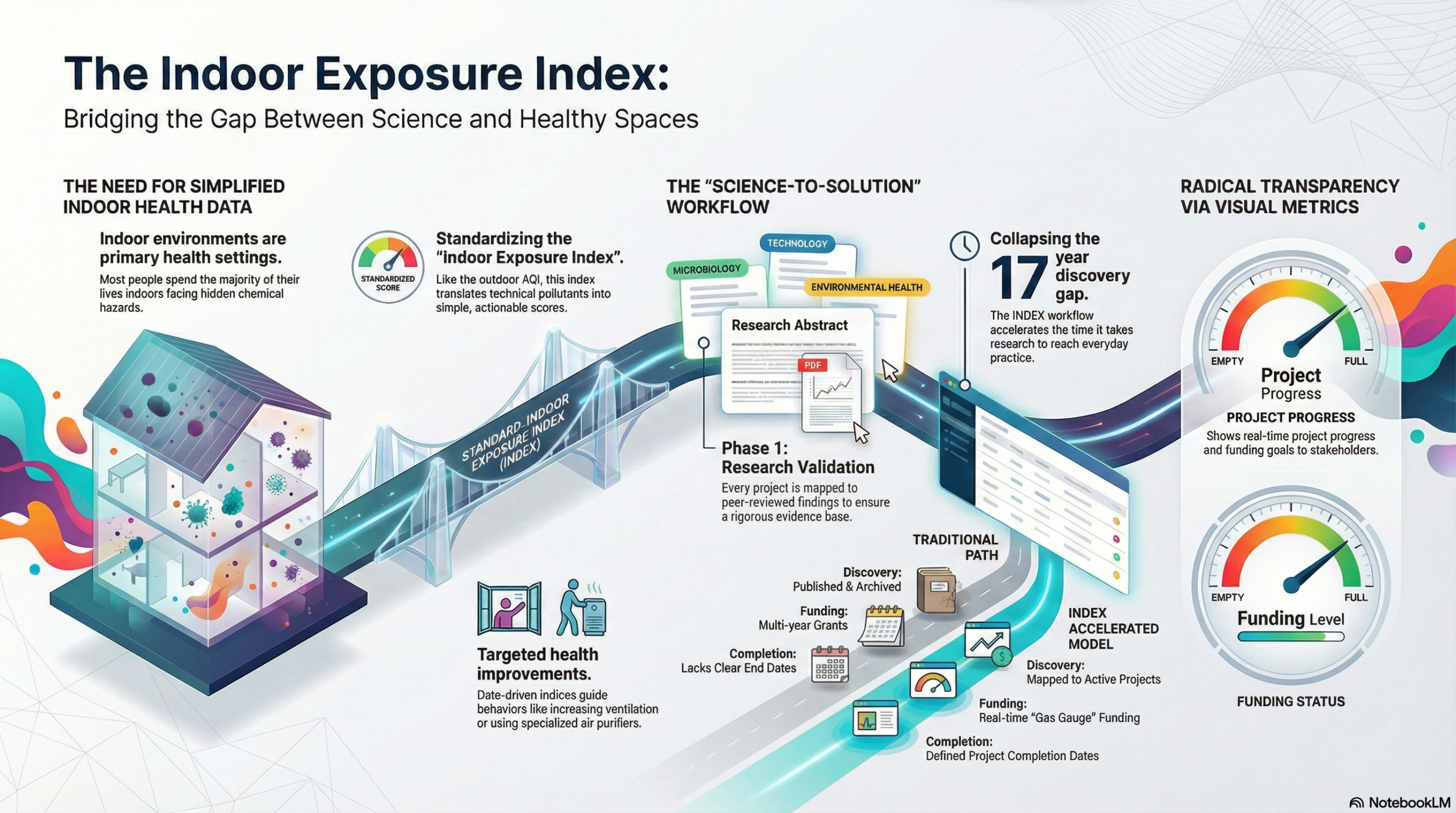 INDEX prioritizes Science‑to‑Solution (S2S) workflows—ensuring peer-reviewed research becomes scalable, funded, and accountable.
The Bioload Exposure Metric Index (BEMI) (pronounced “Be-my”) represents an average level of ATP on a surface translated into a 1-10 scale as a proxy for contaminants like organic, microbial, particulate, and chemical soils found within bioload.
Average ATP levels determine a general bioload level by area which we call the Localized Verified Exposure (LOVE) Index. The BEMI LOVE (“Be My Love”) index number is specific to sampled areas and potentially impacts people in those areas.
Governing Bodies
Progress Status
Funding Acquired
Projected Completion: tbd
Measuring or indexing IAQ depends on using sensors or IAQ monitors to determine a 1-10 level for specific pollutants or pollutant types, starting with particulate matter and VOCs.
A 1-10 scale for contaminants of concern will be associated with various booklets or guides on the INDEX website explaining the meaning of contaminants based on exposure levels and related vulnerabilities per the formula: Risk = Hazard x Exposure + Vulnerability.
Since the unknown variable in the formula is individual vulnerability, topical booklets would help the public and medical professionals determine acceptable vs. unacceptable levels of exposure.
Broadly, the goal is to suggest the best sensor technologies so it becomes possible to develop and promote a neutral scale for indoor air exposures.
Think of IAQ sensors as standardized medical diagnostic tools, rather than health predictors, as they provide data for factoring into levels of vulnerability and individual uniqueness.
Progress Status
Funding Acquired
Projected Completion: tbd
BEMI
Bioload Exposure Metric Index (BEMI)
IAQ Exposure Index
IAQ Exposure Index
S2S Workflows
The INDEX Science Center exists to solve the “Valley of Death”—the notorious gap where groundbreaking research stalls because it lacks funding, workforce, or logistical frameworks. Our closed-loop model collapses the 17-year average from discovery to practice.
Support all research and projects with a single contribution.
A portal for scientists to submit papers for consideration in the INDEX library.