
This Healthy Buildings - Videocast is based on excerpts from the book: Healthy Buildings -…
The Hidden Cost of “Clean”: A Summary of Indoor Air and Health Risks >>>
Recommended 2024 Report: Cleaning products: Their chemistry, effects on indoor air quality, and implications for human health
+Layperson’s Summary+
Since the COVID-19 pandemic began, the use of cleaning and disinfecting products has increased significantly in both homes and workplaces. While these products are often essential for hygiene, they contain a complex mixture of chemicals—including acids, solvents, and fragrances—that can pollute indoor air and harm human health.
The Chemistry of Cleaning
Cleaning products work using specific chemical reactions. Ingredients typically fall into categories like surfactants (soaps), acids (for limescale), bases (for grease), and enzymes (for breaking down proteins).
Indoor Air Quality and “Secondary” Pollution
“Cleaning” doesn’t just remove dirt; it may add pollutants to the air.
Volatile Organic Compounds (VOCs): Many cleaners release gases called VOCs.
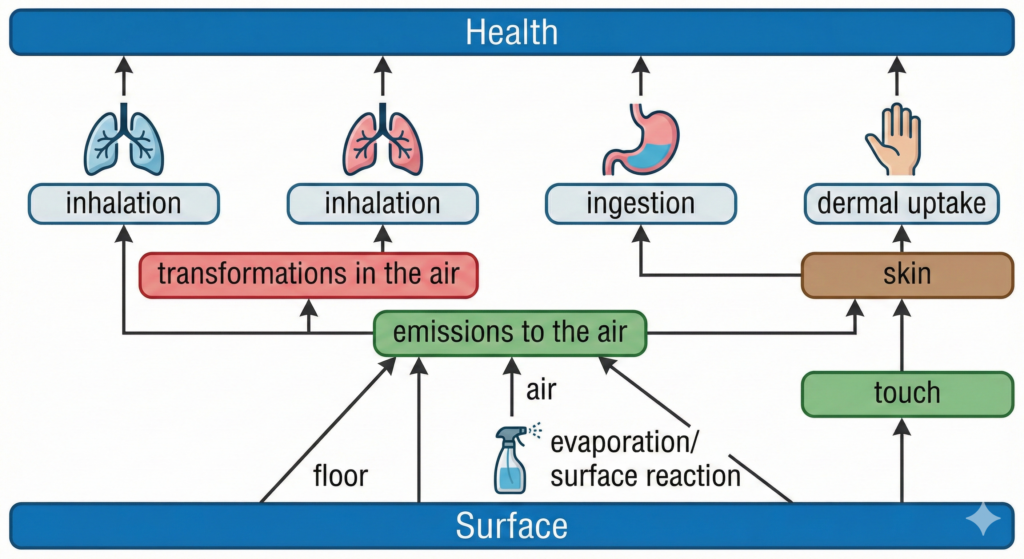
The “Lemon Scent” Problem: Fragrances often use chemicals called terpenes (like limonene for lemon scent). When these mix with ozone (a gas often already in the air), they react to form “secondary organic aerosols”.
Particle Pollution: These reactions create tiny, invisible particles (ultrafine particles) that hang in the air. Research shows that “cleaning” classrooms or homes can cause massive spikes in these particle levels, which we then breathe in.
Health Impacts
Exposure to these chemicals affects both professional cleaners and people cleaning their own homes.
Respiratory Health
Asthma: There is strong evidence linking cleaning chemicals to new cases of asthma and the worsening of existing asthma symptoms.
Sprays are Worse: Products applied as sprays are more dangerous than liquids or wipes because they force chemicals into the air, making them easier to inhale.
COPD: Long-term exposure in occupational settings is linked to Chronic Obstructive Pulmonary Disease (COPD).
Vulnerable Groups: Children
Children are at higher risk than adults for several reasons:
They breathe more air relative to their body weight.
They spend more time on the floor where heavy pollutants settle.
They have more hand-to-mouth contact, potentially ingesting chemical residue.
How to Protect Yourself
The report suggests several practical ways to reduce exposure while still keeping environments clean:
Ventilation is Key: Always open windows or run fans during and after cleaning to flush out airborne chemicals.
Choose Safer Products: Avoid sprays when possible; use wipes or liquid pour products instead. Look for products with low VOCs and avoid strong fragrances.
Don’t Over-Clean: Minimize the use of harsh disinfectants unless necessary for infection control. Simple soap and water often suffice.
Protective Gear: Wear gloves and appropriate clothing to prevent skin absorption.
Timing: In schools or offices, cleaning should happen when the building is empty, allowing time for the air to clear before people return. Run the ventilation system to bring in fresh air during and after cleaning procedures.
Future Outlook
The future of cleaning looks toward “greener” chemistry and sustainable ingredients that are less harmful or less toxic (e.g., EPA’s Safer Choice products). There is also emerging research into “probiotic” cleaners that use beneficial microbes to outcompete bad bacteria, potentially reducing the need for harsh chemicals.

Comments (0)