

This Healthy Buildings - Videocast is based on excerpts from the book: Healthy Buildings -…
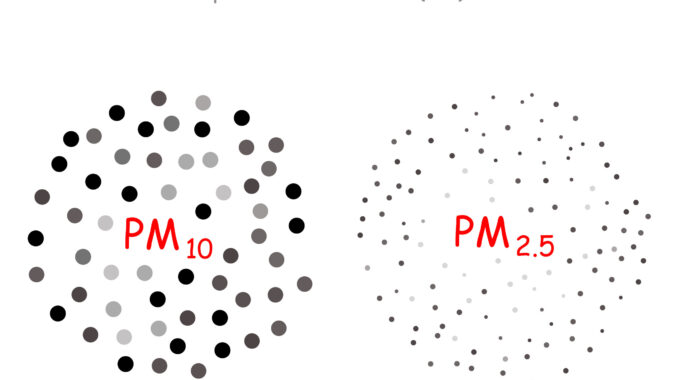
Dust Management: How Small Particles Create Big Benefits >>>
(see also, Mind Your Dust, CMM magazine)
While dust may make you look bad when a “white glove test” flags poor cleaning, awareness of its presence can prompt adopting a science-based dust management program to improve customer perception, protect health, and enable competitive advantage.
Control Measures
Since dust control starts with prevention, strive to ensure generous entry matting to reduce tracking, as ISSA estimates effective mats may capture 85% of soils within the first 10–15 feet of walk-off length which lowers the cost of soil removal and related asset repair and replacement.
Dust with a damp microfiber cloth rather than a feather or puff duster to reduce stirring and resettling dust.
Practice “facial distancing” by emptying or changing vacuum filters away from breathing zones.
Reduce sources of clutter in a cooperative program with customers which also lowers costs by reducing cleanable surface area and dust catchers.
As some vacuum cleaners may act as dust pumps, changing to better filtered vacuums can reduce airborne and settling dust as shown by an affordable desk top dust meter or particle counter that continuously measures and graphs dust levels of 2.5 and .5 micron size particles. The reductions achieved through better vacuuming could reduce the need for physical dusting from say five days a week to three in a single building, effectively lowering dusting labor at $14.35 hr. from perhaps 16 to 9.6 hrs. a week saving ~$92 per wk., which across five similar buildings equals $459 wk. — paying for the dust meter in a single week — or an annual labor reduction of $23,878.40.
Surface Dust—A Proxy for Airborne Exposure
Surface dust-levels help reveal airborne contamination and health impacts, as the ~40 pounds of airborne dust that settles in a typical indoor space yearly contains skin cells, hair, insect parts and droppings, bacteria, viruses, mold fragments, microplastics, endocrine disruptors, nanoparticles, pollen, textile fibers, pesticides tracked in on shoes, cleaning chemicals, toner, paper dust, and more.
Thankfully, assessing airborne and settling dust is relatively simple. As mentioned, using an area air particle monitor (aka, a desk top dust meter) is an effective tool, but even an LED flashlight (>200 Lumens) in a darkened room can detect the presence of dust when the beam is angled to show particles on a surface. Also, using clear cellophane tape placed then removed to pick up surface dust in the two-inch spot — initially, try to find the cleanest and the dustiest place (strictly subjective) to give an overall perspective on settled-dust conditions — and viewing the dust under a low-cost jeweler’s loupe magnifier, then counting and averaging the particles by sampling several representative areas is a practical method for periodic dust assessment. Also use a small inspection mirror — a lightweight telescoping one like the type used for auto inspections, pipe maintenance, and home repairs — to locate dust buildup on high sills and dust bunnies (yes, that is the proper term) in areas with little air movement.
For a scientific assessment of allergens, send a dust sample to a lab specializing in this field. It’s fairly inexpensive (~$100-$625) as a one-time expense and provides valuable information about the presence of specific pollens or molds.
Dust Management as Preventative Medicine
Study after study shows dust contains unhealthy matter. A 2024 study “Nanoparticles of dust as an emerging contaminant in urban environments” found “nanoparticles of urban dust pose a potential threat to human health and urban ecosystems” and were carriers of heavy metals including copper, mercury, zinc, molybdenum, antimony, and lead. A 2022 study found microplastics such as polyethylene and polycarbonate are present in indoor dust with the greatest concentrations in residential apartments, followed by offices, business hotels, university dormitories and classrooms. A 2008 study, “Occurrence of endocrine-disrupting chemicals (ED) in indoor dust” found exposure to (ED) was 1000 times greater indoors than outdoors.
Per the 2011 book, Human Toxicology of Chemical Mixtures by Harold Zeliger, even more concerning is that while exposure to individual chemicals such as those found in dust may be within stated safety thresholds, in mixtures they can be toxic and harmful in ways that cannot be easily studied or measured, and in a way that exceeds the sum of individual toxicities.
Lastly, a 2020 UC Davis study, “Influenza A virus is transmissible via aerosolized fomites” found “influenza viruses can spread through the air on dust, fibers and other microscopic particles” and “aerosolized fomites can be generated from inanimate objects, such as by manually rubbing a paper tissue contaminated with influenza virus.” Researcher William Ristenpart of UC Davis concluded: “Transmission via dust opens up whole new areas of investigation and has profound implications for how we interpret laboratory experiments as well as epidemiological investigations of outbreaks.”
Bottom line: If poor dust management can make you sick, effective management can make both people and cleaning businesses healthier.
Dust Management as Business Advantage
Less dust means less labor, better overall health conditions, and greater productivity. An often-cited 2004 study by William Fisk and Arthur Rosenfeld noted that improving indoor environments would save U.S. businesses “$6 billion to $19 billion from reduced respiratory disease; $1 billion to $4 billion from reduced allergies and asthma, $10 billion to $20 billion from reduced sick building syndrome symptoms, and $12 billion to $125 billion from direct improvements in worker performance”—including less sneezing, coughing, malaise and distraction associated with respiratory illness — with ROI being 18x to 47x the money spent to improve the indoor environment.
Workers and customers that are fully present and engaged through better indoor air will be more effective, productive, and healthier. In short, controlling small particles provides a competitive edge that drives big benefits.
Authors
Robert W. Powitz is Principal Forensic Sanitarian, R. W. Powitz & Associates, P.C., www.sanitarian.com
Allen Rathey is Executive Director of the 501c3 [pending] Indoor Exposure Index, www.indoorexposureindex.org
(see also, Mind Your Dust, CMM magazine)

Comments (0)