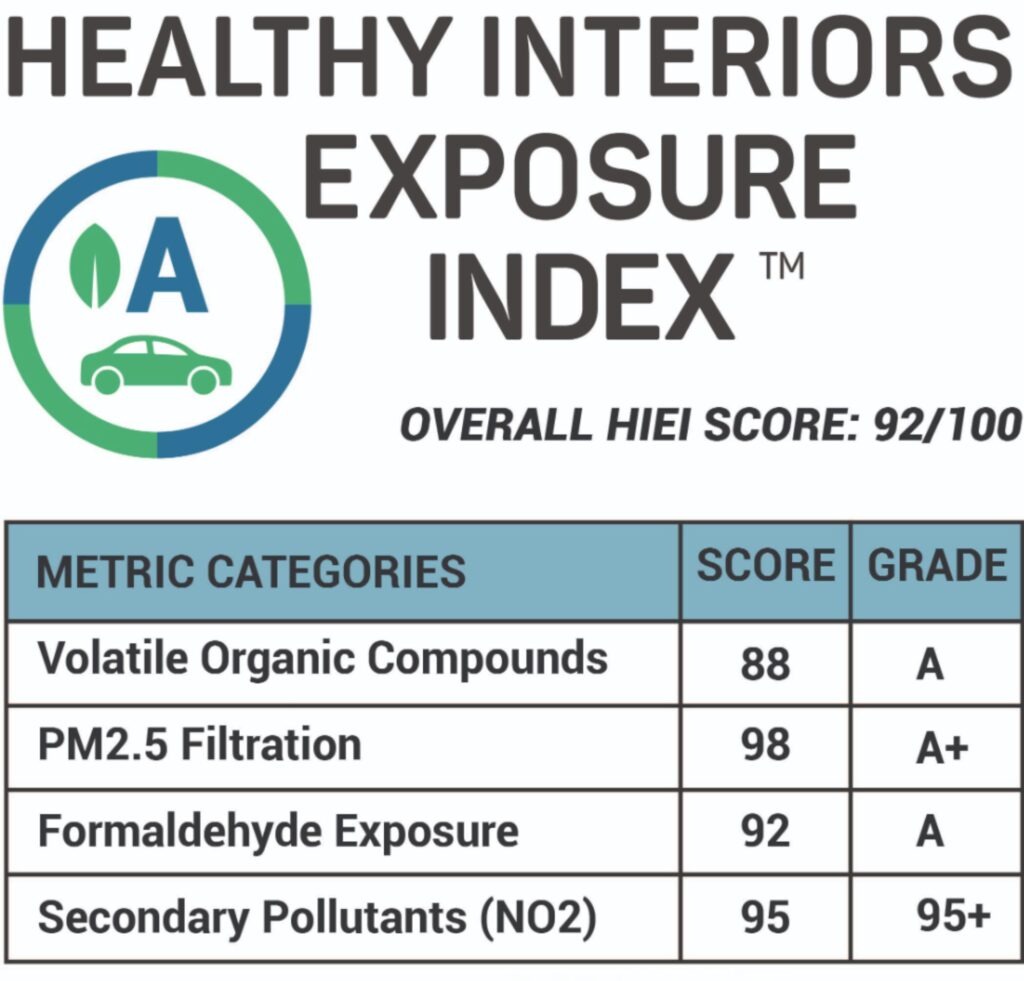

Developing a Healthy Interiors Exposure Index (HIEI) will provide a much-needed bridge between automotive engineering and public health. This info is part of the Workgroup Steering Document in development.
The Challenge: “The Dose Makes the Poison”
The main hurdle is that exposure is cumulative. It’s hard to isolate the car’s impact when a driver also faces pollution at home or work. However, since the car is a high-concentration, small-volume space, it represents a “worst-case scenario” that is ripe for standardization.
Why an Index is Necessary
Modern car interiors are complex chemical environments. Without a standardized index, consumers are essentially “breathing in the dark.”
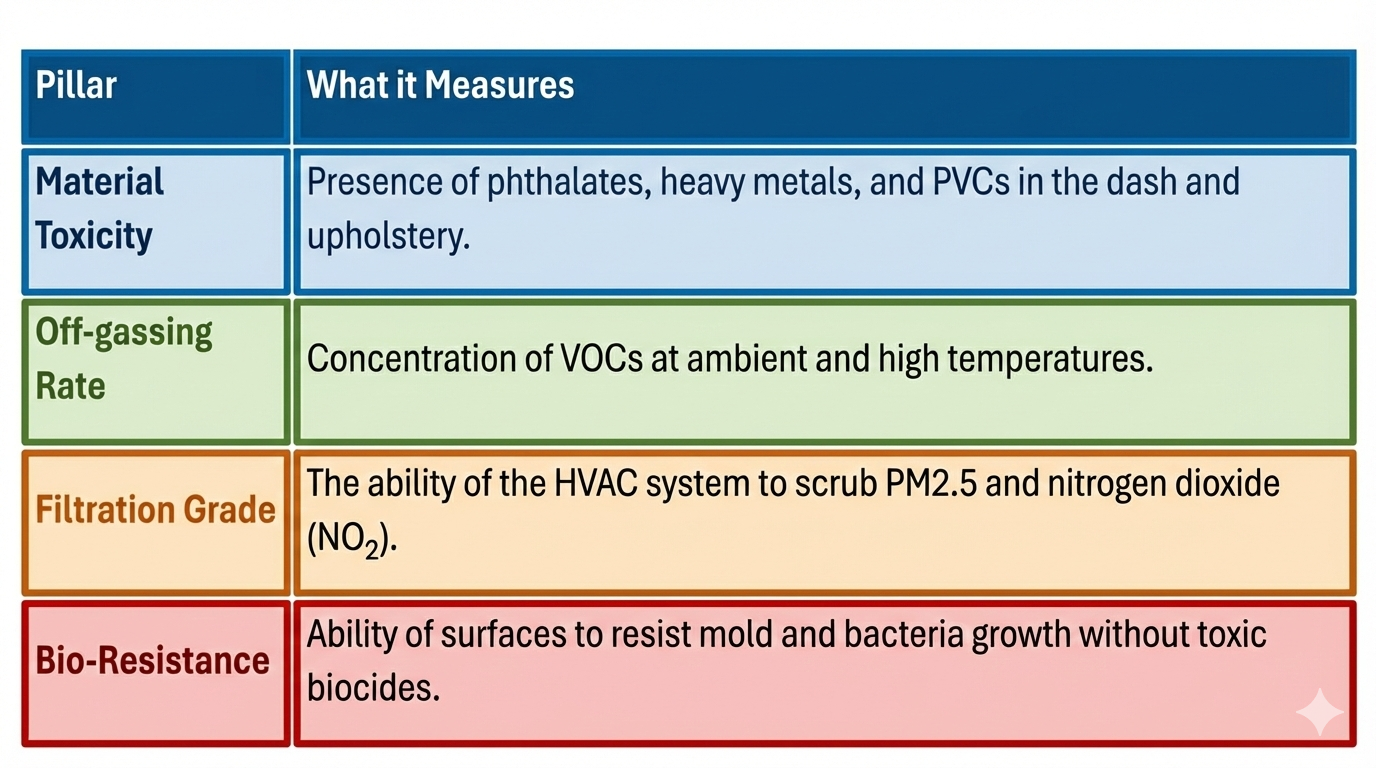
• The “New Car Smell” Reality: That iconic scent is actually a cocktail of Volatile Organic Compounds (VOCs) off-gassing from plastics, adhesives, foams, and leathers. This includes chemicals like
benzene, formaldehyde, and toluene.
• The Greenhouse Effect: High temperatures inside a parked car accelerate chemical off-gassing. An index could rate how well materials hold up under thermal stress.
• Particulate Matter (PM2.5): Vehicles are often stuck in traffic, surrounded by brake dust and exhaust. An index would evaluate the efficiency of the cabin’s filtration system (HEPA vs. standard).
• Secondary Surface Contact: Flame retardants and antimicrobial coatings on seats and steering wheels can be absorbed through the skin.
Potential Components of the Index
The “Value Add” for Stakeholders
- For Consumers: It turns “health” from a vague marketing term into a comparable metric. Parents or people with respiratory issues (like asthma) could shop for a car based on “Interior Safety” just as they do for “Crash Safety.”
- For Manufacturers: It provides a competitive edge. Brands like Volvo and Tesla are already leaning into “clean cabin” tech; an index would allow them to prove their claims. A window sticker would inform car buyers.
- For Regulators: It sets a baseline for future legislation, moving beyond the “wild west” of interior chemical usage.